

Steel processing plays a major role in determining how this versatile metal is used across industries. From construction and manufacturing to transportation and appliances, the properties of steel depend largely on how it was processed. Among the most common types are hot rolled and cold rolled steel, each designed for different applications and performance requirements.
At Hascall Steel, we supply high-quality hot rolled and cold rolled steel sheets and coils to manufacturers throughout Grand Rapids, Detroit, Chicago, and across Michigan, Illinois, and Indiana.
What Is Hot Rolled Steel?
Hot rolled steel is processed at very high temperatures, typically above 1700°F. At this point, the steel becomes more malleable and easier to shape, which allows it to be rolled into large coils or flattened into sheets. This process is fast, efficient, and ideal when precise tolerances are not required.
Because of its flexibility and strength, hot rolled steel is often used for structural and industrial applications such as:
-
Structural beams and sections
-
Tanks and racking systems
-
Guardrails and railroad tracks
-
General fabrication projects
Hot rolled steel typically has a rough, scaly surface due to cooling in open air, but this does not affect performance in most applications. Its lower cost and high strength make it ideal for components where appearance is not a primary concern.
What Is Cold Rolled Steel?
Cold rolled steel begins as hot rolled steel that is further processed at room temperature. Rolling the steel after it cools refines its surface finish, improves dimensional accuracy, and increases strength. The result is a smoother, tighter-tolerance material that performs well in precision applications.
Common uses for cold rolled steel include:
-
Automotive components
-
Home appliances and metal furniture
-
Construction materials requiring a clean surface finish
-
Machined parts and equipment housings
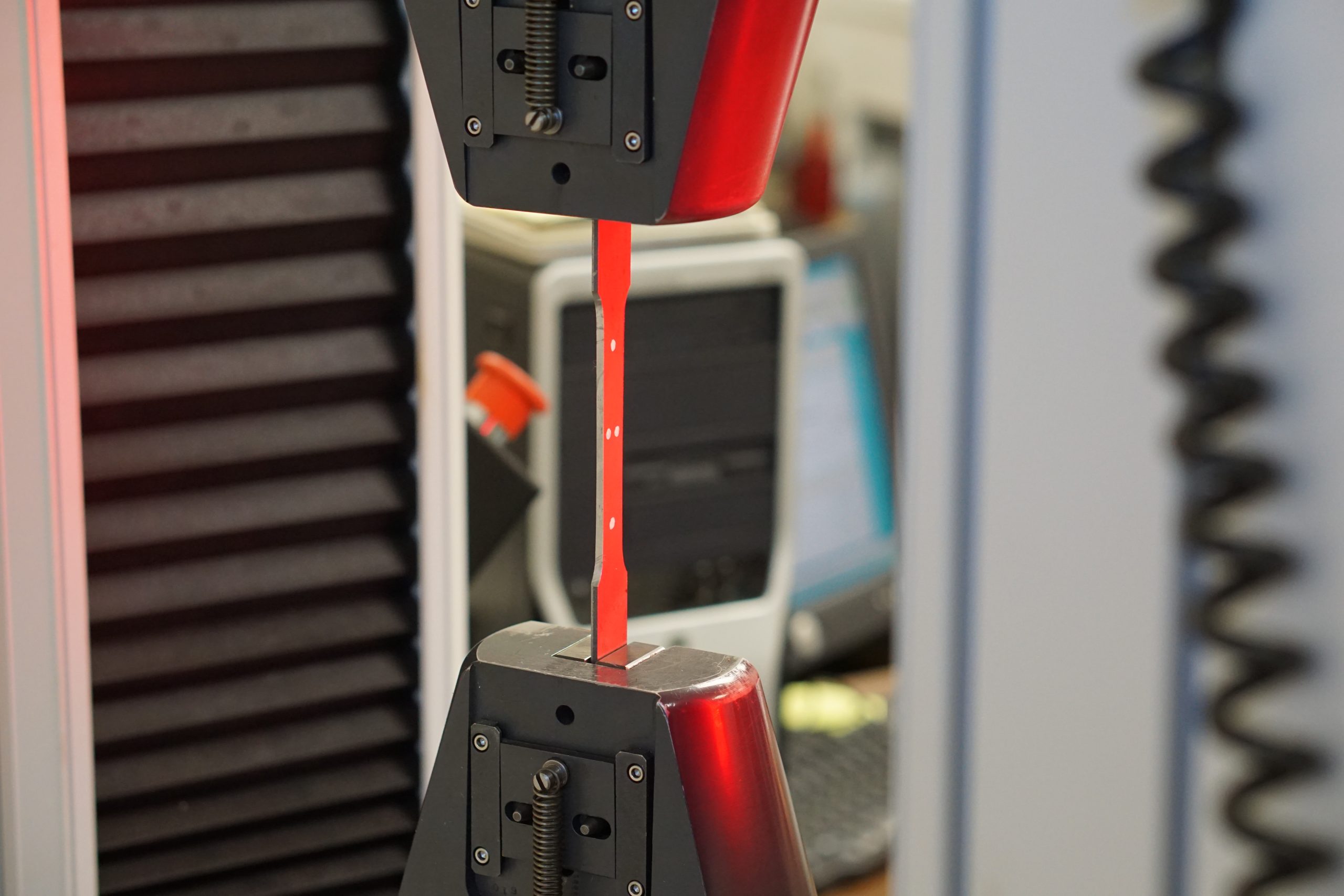
Cold rolled steel has a shiny, smooth appearance and tighter dimensional control than hot rolled steel. It also delivers higher mechanical strength, with a typical tensile strength of 85,000 psi compared to 67,000 psi for hot rolled steel. The yield strength is also higher at 70,000 psi versus 45,000 psi, making it ideal for products that require durability and precision.
Comparing Hot Rolled and Cold Rolled Steel
The main differences between hot rolled and cold rolled steel are in their appearance, mechanical properties, and production methods.
Hot rolled steel:
-
Processed above 1700°F
-
Rough surface with scale
-
Lower cost
-
Suitable for structural and general fabrication
Cold rolled steel:
-
Processed at or near room temperature
-
Smooth, bright surface
-
Higher strength and tighter tolerances
-
Used for precision and aesthetic applications
In short, hot rolled steel is best for applications where strength and affordability are key, while cold rolled steel is preferred when surface finish and accuracy matter most.
High-Quality Flat Rolled Steel from Hascall Steel
Whether you need hot rolled or cold rolled steel, quality always matters. As a trusted Midwest steel supplier, Hascall Steel provides flat rolled steel products that meet exact specifications for thickness, width, and mechanical properties. Our team can help you choose the right material for your project and ensure you receive consistent, reliable coils and sheets every time.
Contact Hascall Steel today to discuss your steel requirements or request a quote. We proudly serve manufacturers across Grand Rapids, Detroit, Chicago, and throughout Michigan, Illinois, and Indiana.